My research is positioned at the interface of electrochemistry, metallic biomaterials and polymer-based systems, with a long-term focus on understanding how physiological environments affect metallic surfaces and implant degradation.
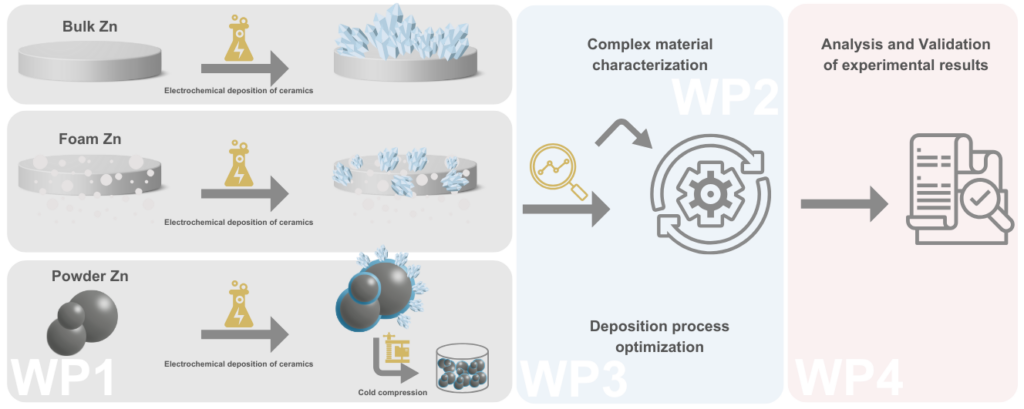
The main objective of the ZETA project is to prepare and study the biodegradable Zn matrix materials electrochemically refined with the ceramic component.
Zinc is one of the most promising metals for temporary bone implants. It degrades in the body at a rate close to the pace of bone healing, and its degradation products take part in natural bone metabolism. Bare zinc, however, does not bond well to bone tissue, and its degradation is hard to control. Coating zinc with hydroxyapatite, the mineral component of bone, can solve both problems. Yet reliable methods for coating a degradable metal were missing, and even more so for porous three-dimensional structures that mimic real bone.
What is new in ZETA
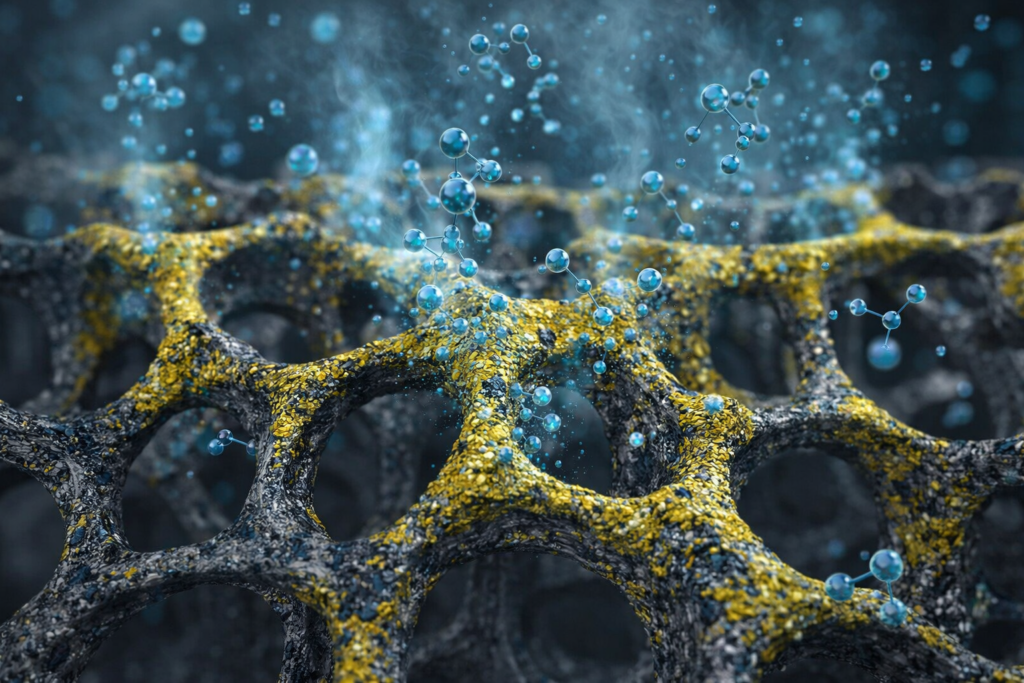
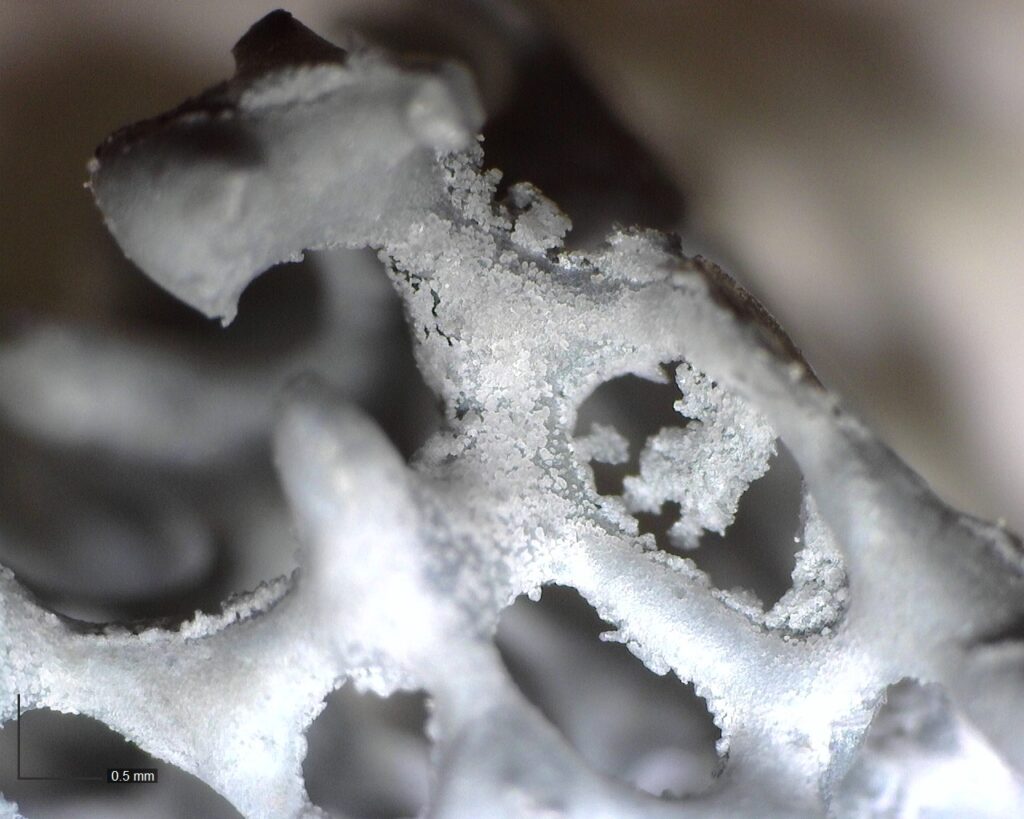
To our knowledge, ZETA is the first project to deposit hydroxyapatite electrochemically on biodegradable zinc substrates, both on flat (2D) surfaces and inside porous zinc foams (3D). Electrochemical deposition works at low temperature, gives precise control over the coating, and reaches surfaces that line-of-sight methods cannot coat. This opens the way to bone substitutes that combine a degradable metal scaffold with a bioactive, bone-like surface.
Key findings
An optimised route to hydroxyapatite coatings on zinc. We identified the deposition parameters (potential, electrolyte composition, temperature and time) that produce uniform, well-adhering hydroxyapatite layers on zinc. We also showed how these parameters must be adapted when moving from flat surfaces to complex 3D foams. The result is a reproducible methodology that other laboratories can use. [→ACS Omega (2026) 11 (1): 1062–1076. https://doi.org/10.1021/acsomega.5c08241]
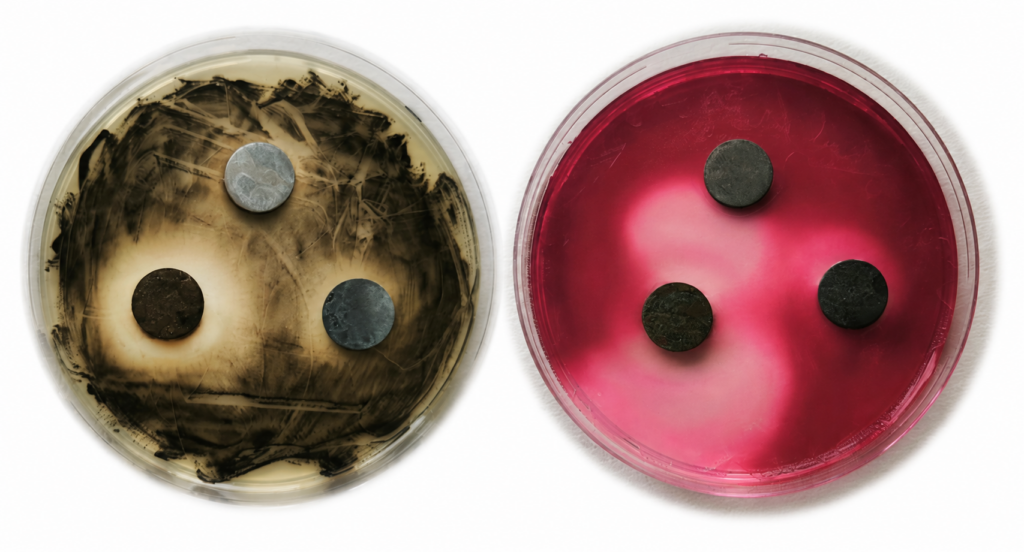
Silver as an antibacterial component of the coating. We showed how silver is built into the hydroxyapatite coating during electrochemical deposition, including its chemical form / distribution in the layer. Silver-containing coatings reduced the growth of bacterial strain(s) while preserving the bone-like structure of the coating. This gives the implant surface antibacterial protection, which matters because infection is a major cause of implant failure. [→ Int. J. Biomaterials, 2026 https://doi.org/10.1155/ijbm/2080076 DOI]
target
Project Relevance
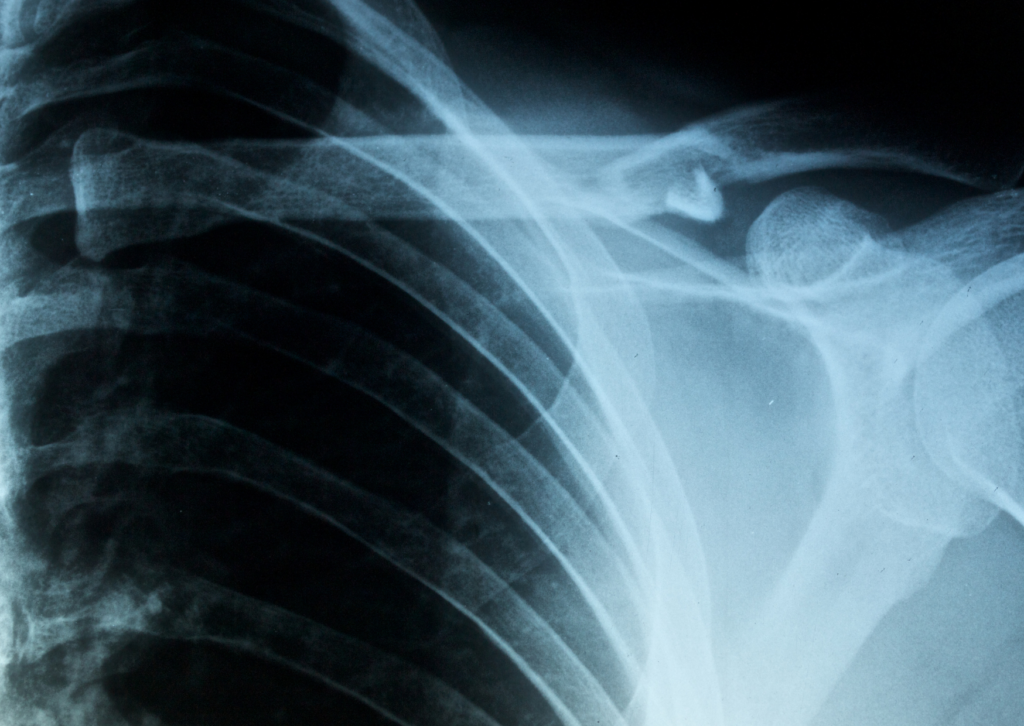
More than 450 million prevalent cases of acute or long-term symptoms of a bone fracture occurred in 2019 [1].
With the increasing life expectancy and the desire for an active lifestyle, there is a growing demand for the development of new bone substitutes to treat these bone defects.